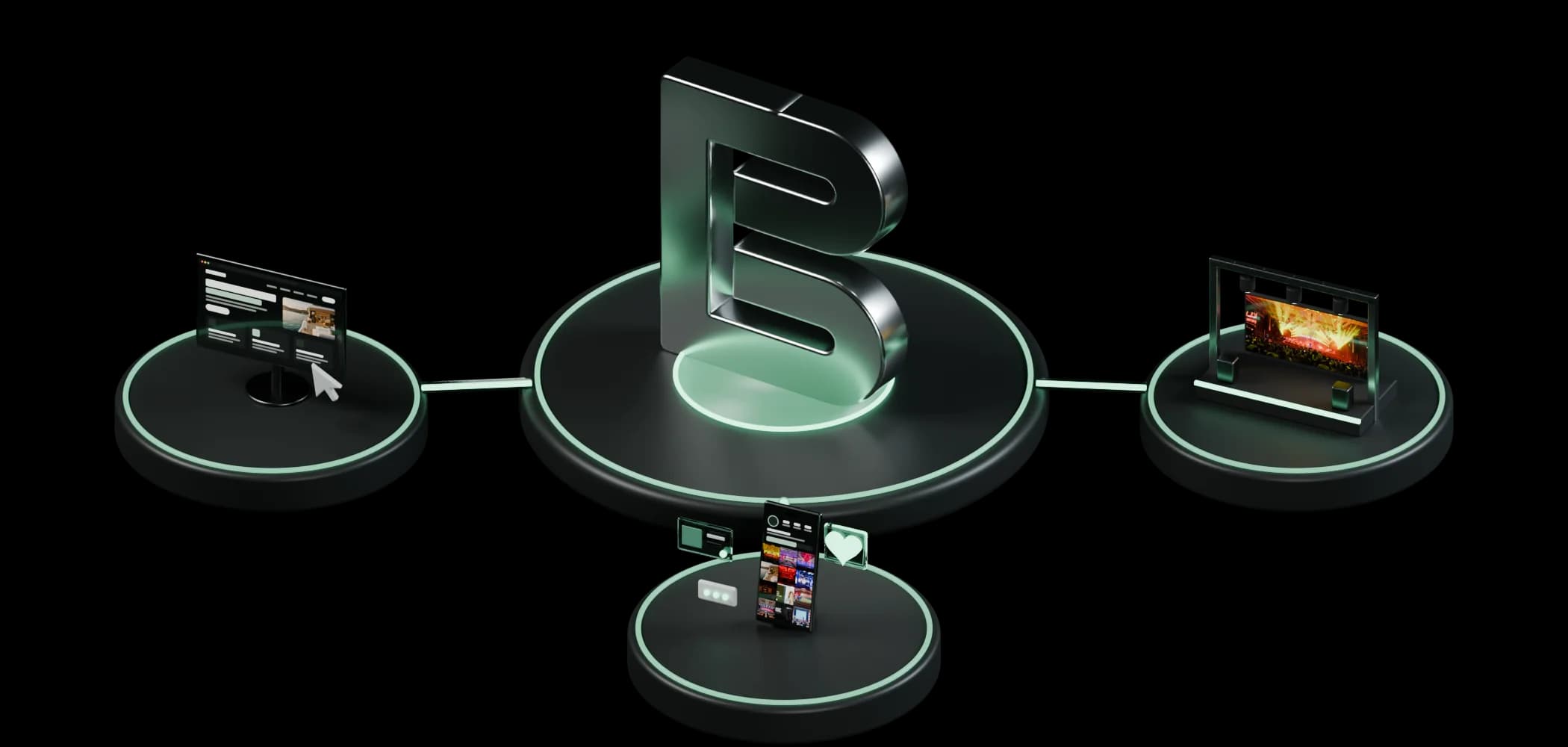
An integrated agency delivers several disciplines, such as software development, event production and social media management, through one contract, one project lead and a single point of contact. Instead of briefing three suppliers separately, you brief one team that plans the website, the stage and the content calendar together. Below we look at when the model works, where it falls short and how to choose the right partner.
What is an integrated agency, and is it the same as full-service?
“Full-service agency” traditionally describes a marketing or advertising agency that covers every communication channel, from strategy and creative to media buying. An integrated agency can go further, combining communications with disciplines such as software development or technical production.
In practice, the terms are often used interchangeably. What matters is not the label but whether the services are genuinely delivered by in-house teams working to one process, or quietly subcontracted. An agency that outsources most of the work may look like a single point of contact on paper while offering few of the real benefits.
The hidden cost of managing separate suppliers
Take a typical corporate launch. A web agency builds the landing page, a production company rigs the stage and a social media team runs the posting schedule. Each may do good work, yet someone still has to fill the gaps between them, and that someone is usually you.
- Coordination overhead: three sets of meetings, three status reports and deadlines that depend on each other.
- Lost context: brand tone, visual identity and key messages are explained to each supplier separately, and small differences add up.
- Blurred accountability: when the registration form breaks or the wrong visual appears on the LED wall, it is not always clear whose problem it is.
- Duplicated work: the same visuals, copy and data are reformatted several times for different teams.
None of this shows up on an invoice, but it eats into your team’s time and slows the whole project down.
Pros and cons of a single point of contact
The clearest benefit of an integrated model is that one project lead manages every workstream against a shared timeline. Decisions move faster, the brief is written once and the outputs stay consistent with each other.
Advantages
- One brief, one voice: the website, the stage and your social channels carry the same message.
- Faster changes: if the stage design shifts, the same team updates the social visuals and the landing page.
- Clear accountability: when something goes wrong, you know exactly who to call.
- Connected data: event registrations, web traffic and social engagement can be reviewed side by side.
Drawbacks
- Dependency: placing everything with one partner can make switching harder if the relationship sours.
- Uneven depth: without genuine specialists in each discipline, quality can vary from one area to another.
- Less flexibility: brands that prefer a niche specialist for one area may find the model restrictive.
When does an integrated agency make sense?
Not every project needs one. If you are building a single mobile app or renting a sound system for one night, a specialist supplier may be all you need. The integrated model earns its keep when the pieces depend on each other.
- Product launches, dealer meetings or congresses with both a digital and a physical side
- Campaigns that need a registration site before the event, stage production on the day and social content afterwards
- Companies with a small marketing team that cannot spare time for supplier coordination
- Organisations that run events throughout the year and want a consistent brand experience
Questions to ask before you choose
When you meet a prospective partner, look past the credentials deck and focus on how the work will actually be delivered. These questions are a good starting point:
- Which services do you deliver in-house, and which do you outsource?
- Will we have one project manager, or will each department contact us separately?
- Can you show completed work of a similar scope?
- How do approvals work, and who signs off on content, design and technical decisions?
- When the project ends, who owns the source code, design files and accounts?
The last question matters most. Working with an integrated agency should never mean giving up ownership of your own digital assets.
How it works at Bern Enterprises
Bern Enterprises is a group based in Maltepe, Istanbul, that brings three companies under one roof. BernSoftware builds websites, e-commerce platforms, mobile apps and AI integrations, and has shipped more than 80 products, including over 57 mobile apps. BernStage handles stage, sound, lighting and LED screen rental, along with technical production and event organisation across Turkey.
BernSocial is a social media operations platform covering brand rules, content production, client and team approvals, scheduling and Instagram publishing. Together, they let a launch’s landing page, stage and social posts run through one contact. If you only need one of them, you can work with that company on its own.
If you would like to explore which parts of your next project could sit under one roof, get in touch with us.